That fleeting, uncanny sensation—the one where a moment feels utterly familiar, as if lived before, yet undeniably new. It’s a trick of the mind, a glitch in our perception of time, and in film, it's a potent narrative device. The psychological impact of déjà vu in film, explored through both the character's lived experience and the audience's visceral reaction, goes far beyond a simple plot point. It's a key that unlocks tension, deepens mystery, and often, defines the very nature of a story’s reality.
Filmmakers wield déjà vu not just to disorient, but to draw us into the labyrinthine minds of their characters, blurring the lines between memory, perception, and premonition. This isn't just a cinematic parlor trick; it's a profound exploration of human consciousness and the fragile construction of "now."
At a Glance: Why Deja Vu Matters in Film
- For Characters: It triggers disorientation, suspicion, and a sense of impending fate, forcing them to question their reality or sanity.
- For Audiences: It creates suspense, fosters empathy, and encourages active engagement, making us feel like we're solving a puzzle alongside the protagonist.
- Narrative Power: Deja vu is a versatile tool for foreshadowing, exploring themes of memory, time, and destiny, and manipulating the viewer's perception.
- Rooted in Science: While cinematic, its power draws from our real-world, unsettling experience of this common brain phenomenon.
- Beyond a Gimmick: When used effectively, it elevates a film from mere entertainment to a thought-provoking psychological experience.
The Brain's Brief Glitch: Understanding Real Deja Vu
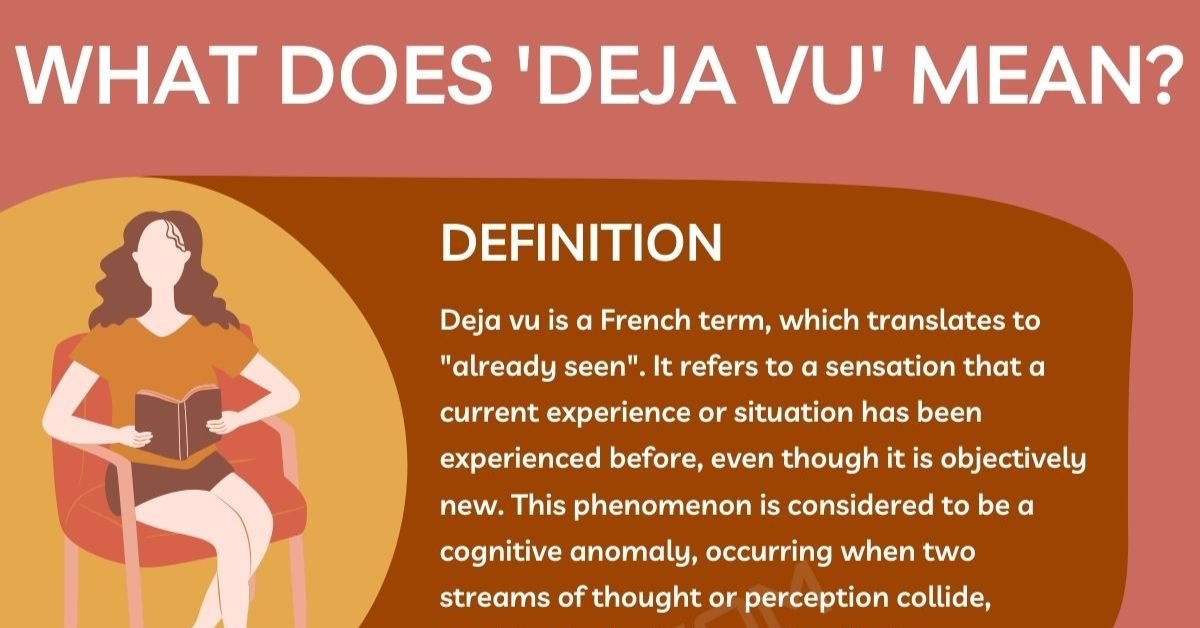
Before we dive into its cinematic applications, let’s ground ourselves in the genuine article. Déjà vu, French for "already seen," is a peculiar and unsettling feeling that an instant has already been lived, despite a conscious understanding that it's impossible. It's surprisingly common, affecting about two-thirds of people at some point in their lives. Though it lasts only a fleeting moment, its impression can be remarkably strong, offering a fascinating glimpse into how our brains construct reality.
Neuroscience suggests déjà vu often arises from a temporary imbalance between two crucial memory processes: the simple sense of familiarity and the ability to consciously retrieve the specific memory associated with that feeling. Picture your brain's familiarity-recognition system erroneously activating, particularly in the hippocampus—a key region for memory encoding—without being able to pull up an actual, precise memory. You feel like you've been there, but you can't place when or why. The familiarity is there, but the context is missing.
Another compelling theory involves our sensory systems. Imagine a tiny, almost imperceptible delay in one sensory input, perhaps a neuronal signal arriving a fraction of a second later in one brain hemisphere compared to the other. This minute temporal offset can effectively turn a single event into a perceived repetition, interpreted by the brain as a memory rather than a subtle quirk of the present moment. Virtual reality studies have even managed to elicit déjà vu in participants by subtly altering virtual environments, providing tangible support for this idea.
Further insights come from individuals with temporal lobe epilepsy, where déjà vu can emerge just before a seizure, particularly when the seizure originates in structures like the hippocampus and the rhinal cortex. The rhinal cortex is specifically linked to false familiarity signals, and direct stimulation of this area can actually trigger the sensation. The hippocampus, in turn, helps assess the context of memories, identifying when familiarity might be misplaced. The delicate interplay between these two areas is paramount for robust memory management.
Even in people without neurological conditions, déjà vu might stem from similar, though transient, disruptions of neural circuits. A spontaneous, localized activation of the rhinal cortex, for instance, could create the sensation. These mild anomalies are more probable when we're under stress, fatigued, or experiencing cognitive overload, all of which can temporarily disturb the brain's finely tuned balance between signals of familiarity and novelty. Ultimately, déjà vu serves as a powerful reminder that our perception of the present is a complex brain construct, continually reconstructed, making our notion of "now" a dynamic product of intricate cognitive processes.
Deja Vu as a Narrative Device: Why Filmmakers Love It
For storytellers, déjà vu is pure gold. It’s an instant signifier of mystery, a jolt that tells the audience something isn't quite right. It doesn't need lengthy exposition; the feeling itself is universally understood, albeit perplexing. Filmmakers harness this shared human experience to achieve several powerful narrative effects:
- Instant Disorientation: It immediately throws a character, and by extension the audience, off balance. The world they thought they knew suddenly feels unstable.
- Foreshadowing Without Spoilers: A flash of déjà vu can hint at future events or past connections without explicitly revealing them, building suspense and encouraging active viewing.
- Questioning Reality: Is the character experiencing a memory, a premonition, a mental breakdown, or something supernatural? This ambiguity is fertile ground for psychological thrillers and sci-fi.
- Thematic Depth: It allows films to explore profound themes of memory, time, destiny, reincarnation, and the very nature of human consciousness.
For the Character: A Disorienting Premonition
When a character experiences déjà vu on screen, it's rarely just a fleeting moment of confusion. In cinema, this sensation is often amplified, becoming a catalyst, a warning, or even a driving force for their journey.
Internal Conflict and Questioning Sanity
Imagine a protagonist, let's call her Sarah, walking down a street she's never visited, yet every storefront, every crack in the pavement feels intimately familiar. The immediate effect is internal. Is she losing her mind? Is she dreaming? This mental instability can propel a character into a desperate search for answers, as seen in films like The Matrix, where Neo's repeated glitches in the matrix slowly erode his certainty about his world. The psychological toll of these recurring, unexplained moments can be immense, pushing characters to the brink. They might doubt their memories, their perceptions, and ultimately, their sanity.
Foreshadowing and the Grip of Destiny
Often, cinematic déjà vu acts as a subtle, or not-so-subtle, form of foreshadowing. A character experiences a moment they recognize, only for a crucial event—a conversation, an accident, a revelation—to immediately follow, validating that unnerving familiarity. This can imply a predetermined path, where events are destined to unfold in a certain way, regardless of the characters' choices. Think of a hero who repeatedly sees an image or hears a phrase before a significant turning point; it suggests a larger, unseen force at play. This gives the audience a sense of impending fate, even if the character initially dismisses it as coincidence. It’s a powerful way to raise the stakes.
A Catalyst for Action or Breakdown
For some characters, déjà vu isn't just an internal experience; it demands action. The feeling that something has "already happened" can drive them to try and alter the outcome, or to frantically understand the source of their premonitions. Conversely, the relentless repetition without understanding can lead to a psychological breakdown, trapping them in a loop of fear and confusion. This duality—action or paralysis—makes déjà vu a dynamic tool for character development, forcing them to confront their deepest fears and beliefs about reality.
For the Audience: The Shared Shiver of Recognition
The magic of cinematic déjà vu isn't just in what the character feels; it's in how we, the audience, experience it. A well-executed déjà vu moment can trigger a profound, shared psychological response that deepens our engagement with the film.
Empathy and the Collective Unconscious
When a character clutches their head, eyes wide with recognition and confusion, we feel it too. We've all had that unsettling "I've been here before" sensation. This shared human experience fosters instant empathy, drawing us closer to the character's internal struggle. We become complicit in their search for answers, their paranoia, or their dawning realization. It taps into a kind of "collective unconscious" where the universal strangeness of déjà vu becomes a bridge between the screen and our own minds.
Suspense, Tension, and Active Engagement
As the audience, we're often given visual or auditory cues that confirm the character’s déjà vu before they even fully articulate it. A repeated camera angle, a recurring piece of dialogue, a specific prop appearing again. This creates a fascinating tension. We recognize the pattern, but like the character, we don't yet understand its significance. This positions us as active participants, piecing together clues, generating theories, and anticipating what might happen next. It's a psychological puzzle box, engaging our cognitive functions and holding us on the edge of our seats.
Manipulating Perception and Playing with Trust
Filmmakers adeptly use déjà vu to manipulate our perception of the narrative itself. Are we seeing a flashback? A memory from a past life? An alternate timeline? The ambiguity forces us to question the very fabric of the story's reality. When déjà vu is used repeatedly, it can erode our trust in the narrative, making us doubt what's real and what's merely an illusion within the film's world. This can be deeply unsettling, leaving a lasting psychological impact long after the credits roll.
Mastering the Illusion: How Directors Craft Cinematic Deja Vu
Creating a convincing sense of déjà vu on screen requires more than just a character saying, "I've seen this before." It's a carefully orchestrated symphony of visual, auditory, and structural techniques.
Visual and Auditory Echoes
Directors often employ specific visual and auditory cues to create the feeling of repetition. This can include:
- Recurring Imagery: A specific object, a pattern, or even a color palette reappearing in distinct scenes can subtly suggest a loop or connection. Think of a recurring motif in a dream sequence that later manifests in "reality."
- Camera Angles and Framing: Repeating the exact same shot, camera movement, or character blocking from an earlier scene is a powerful visual trigger. It instantly jolts the audience, even before the character reacts.
- Sound Design and Music: A particular melody, a specific sound effect (like a clock ticking or a distant whisper), or even a unique ambient noise can be repeated to create an auditory echo, especially effective if the character themselves reacts to it.
Editing Techniques for Temporal Distortion
Editing is crucial in manipulating time and perception, making it an ideal tool for cinematic déjà vu.
- Jump Cuts and Flashes: Quick, almost subliminal cuts to a past (or future) moment can mimic the fleeting, disorienting nature of real déjà vu.
- Montage: A rapid succession of familiar images or sounds can overwhelm the viewer, creating a sense of being caught in a loop or memory.
- Temporal Loops: Films like Groundhog Day or Source Code take the concept to its extreme, making the entire narrative a literal loop, where déjà vu is not just a feeling, but the fundamental structure of the character's reality.
Subtlety vs. Overt Declaration
The most effective cinematic déjà vu often walks a fine line between subtlety and overt declaration. Sometimes, a director will let the audience experience the recognition before the character does, building suspense. Other times, the character’s sudden, visceral reaction validates our own unsettling feeling. The power lies in the ambiguity – is it a memory, a premonition, or a sign of something more profound?
Beyond the Moment: Deja Vu's Deeper Themes in Film
When filmmakers truly commit to déjà vu, they use it to explore complex, philosophical questions that resonate deeply with audiences. If you're keen to Explore movies on deja vu, you'll find that many titles delve into these powerful concepts.
Time Loops, Alternate Realities, and Fate
Films like Edge of Tomorrow (or Live Die Repeat), Source Code, and Looper don't just use déjà vu as a feeling; they build entire narratives around the concept of reliving moments, either to change an outcome or fulfill a destiny. These films grapple with the idea of fixed timelines versus mutable futures, posing questions about free will in the face of predestination. The character's repeated experiences become their training ground, their penance, or their only hope.
Memory Manipulation and the Nature of Truth
Déjà vu often blurs the lines between true memory and constructed reality. Films like Memento or Eternal Sunshine of the Spotless Mind play with the unreliable nature of memory itself, showing how our pasts can be altered, forgotten, or intentionally erased. In these contexts, déjà vu might signify a fragment of buried truth trying to surface, a memory trying to reassert itself against suppression. It highlights how our perception of "now" is profoundly influenced by what we believe happened "then."
Reincarnation and Karmic Cycles
In some narratives, particularly those with spiritual or mystical undertones, déjà vu can suggest past lives or karmic connections. A character might feel an inexplicable bond with a stranger or an intense familiarity with an ancient place, implying a history that transcends their current existence. This adds a layer of cosmic significance to the feeling, suggesting that some experiences are woven into the very fabric of the soul across lifetimes.
Trauma and Repetition
Déjà vu can also be a haunting echo of past trauma. Characters might find themselves reliving moments that mirror a deeply painful event, not necessarily in a literal time loop, but in recurring patterns or situations. This can manifest as PTSD, where the brain replays fragments of the past, making the present feel eerily familiar and threatening. It speaks to the brain's complex way of processing and sometimes re-enacting unresolved experiences.
Common Missteps: When Deja Vu Falls Flat
While powerful, déjà vu is a nuanced tool that can easily be misused.
- Overuse or Lack of Purpose: If every other scene features a character experiencing déjà vu without advancing the plot or deepening the theme, it quickly becomes a repetitive gimmick. The impact diminishes, and the audience grows weary. It needs to serve a clear narrative or psychological function.
- Explaining It Too Much: The allure of déjà vu lies in its mystery. Over-explaining the phenomenon within the narrative—having characters launch into scientific diatribes—can strip away its magic and reduce its unsettling power. It's often more effective when left subtly ambiguous.
- Confusing the Audience Unnecessarily: While ambiguity is good, outright confusion isn't. If the déjà vu moments are so convoluted that the audience can't discern what's happening or why it's important, they disengage. There needs to be enough breadcrumbs for the audience to follow, even if the full picture isn't immediately clear.
Frequently Asked Questions About Cinematic Deja Vu
Is cinematic déjà vu the same as real-life déjà vu?
No, not precisely. While cinematic déjà vu draws its power from our real-world experience, films often amplify and stylize it. In reality, déjà vu is usually a fleeting, non-significant neurological glitch. In film, it's typically imbued with narrative purpose: a premonition, a memory, or a sign of deeper truths. It's the feeling that's accurately portrayed, not necessarily the underlying cause or consequence.
What's the difference between déjà vu and a premonition in film?
In film, déjà vu often leads to a premonition, or is interpreted as one by the character. Déjà vu is the sensation of having experienced something before. A premonition is a forewarning of a future event. A character might have déjà vu about a specific location, only for a crucial, foreseen event to then unfold in that exact spot, turning the déjà vu into a confirmed premonition.
Can films actually trigger real-life déjà vu in viewers?
It's unlikely a film would directly trigger a full-blown, clinical déjà vu episode in the way that real-world situations or neurological conditions might. However, films that repeatedly use similar visual cues, sounds, or narrative structures can create a meta-déjà vu effect for the audience. You might feel a sense of familiarity, not about the specific scene in the movie, but about the filmic technique itself, making you think, "I've seen this kind of storytelling before." It’s more of a sophisticated narrative recognition than a brain glitch.
The Art of the Replay: Crafting Lasting Impressions
The psychological impact of déjà vu in film is a testament to the power of shared human experience and the artistry of storytelling. By tapping into that universal, unsettling feeling, filmmakers can create narratives that resonate deeply, challenge our perceptions of reality, and provoke profound thought. Whether it's a subtle hint of a loop or an overt declaration of a distorted timeline, cinematic déjà vu reminds us that our present is always influenced by what came before, and sometimes, by what feels like it's yet to come, even if we've "seen it all" already.
The next time a character on screen pauses, a flicker of recognition in their eyes, take a moment to appreciate the intricate dance of memory, perception, and narrative unfolding. It's more than just a trick; it's a window into the mind, both fictional and real.