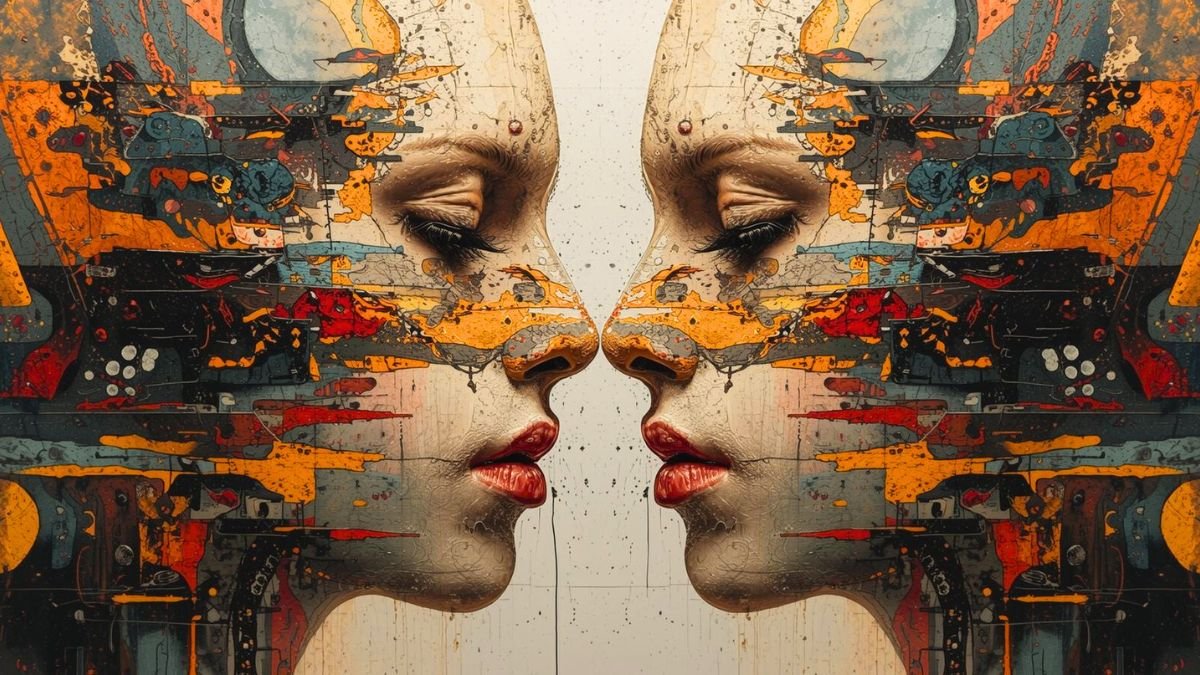
Have you ever walked into a new place, met someone for the first time, or heard a piece of music, only to be struck by an overwhelming, inexplicable feeling of "I’ve been here before," "I know you," or "I've heard this"? That uncanny sensation, déjà vu, is a familiar whisper from the subconscious. But what if it’s more than just a glitch in our brain's processing? What if it's a fleeting glimpse into something far more profound—a ripple from an alternate reality, a memory from a parallel timeline, or even a premonition of what's to come? This journey [Beyond Deja Vu: Cinematic Connections to Memory, Alternate Realities, and Precognition] takes us into the rich tapestry of film, where storytellers grapple with these very questions, bending time and reality to explore the deepest mysteries of human experience.
At a Glance: Unpacking Cinematic Reality
- Déjà Vu's Dual Nature: While science points to memory quirks, intriguing theories link déjà vu to parallel realities, spiritual nudges, and quantum physics.
- Memory on Screen: Films deconstruct memory, showing it as a malleable, unreliable, and sometimes manipulated force that shapes our identity.
- Alternate Realities Explored: Cinema frequently invites us to ponder "what if?" scenarios, showcasing multiverses, parallel lives, and the impact of seemingly small choices.
- Precognition's Cinematic Edge: From prophecies to time loops, movies explore the allure and terror of knowing the future, challenging our notions of free will and destiny.
- Why It Matters: These stories aren't just entertainment; they're thought experiments that push the boundaries of our understanding of consciousness, time, and the very fabric of existence.
The Whisper of Déjà Vu: More Than Just a Brain Glitch?
At its core, déjà vu, a French phrase meaning "already seen," describes that odd moment where a new experience feels deeply, inexplicably familiar. You might step into a café for the first time, yet every detail—the worn counter, the faint aroma of espresso, the gentle hum of conversation—feels like a re-run of a forgotten scene. For many, it's a fleeting, unsettling, yet captivating sensation.
Mainstream science typically chalks up déjà vu to a minor hiccup in our brain's incredible, complex machinery. Think of it like a momentary software bug:
- Temporal Overlap: Imagine your short-term and long-term memory circuits momentarily blurring. A new experience is filed away simultaneously as both novel and deeply embedded, creating the illusion of past familiarity.
- Subconscious Sneak Peek: Perhaps your brain registers elements of a situation—a specific angle, a particular sound—before your conscious mind fully processes it. When the conscious awareness catches up, it feels like recognition.
- Neural Delays: A slight, almost imperceptible delay in how different parts of your brain process sensory information can cause a perception to be registered twice, making the second "view" feel like a recall.
These explanations are tidy, rational, and, frankly, a little mundane for such a profound feeling. This is precisely where the more intriguing theories take hold, and where cinema often finds its richest soil for storytelling.
Beyond the Brain Glitch: Parallel Realities and Deeper Meanings
What if déjà vu isn’t just a misfire, but a signal? A faint echo from a different dimension, a message from a higher self, or a clue from the universe itself? These possibilities open up a fascinating intersection of science, philosophy, and spirituality, concepts that filmmakers adore exploring.
Some compelling theories posit déjà vu as potential evidence for parallel realities or alternate timelines, drawing inspiration from quantum physics and the concept of the multiverse—where an infinite number of realities might exist simultaneously. Consider these possibilities:
- A Glimpse Into Another Timeline: Perhaps your consciousness, for a fleeting moment, aligns with a parallel version of yourself in another reality who has already lived this exact moment. It’s like tuning into a different frequency on a cosmic radio.
- An Overlap Between Realities: Imagine two realities momentarily bleeding into one another, a shimmering alignment where the edges of different dimensions touch, offering a momentary "flash" of familiarity from a place you’ve never consciously been.
- Dimensional Awareness: This theory suggests a "higher self" or a part of our consciousness exists beyond linear time and space. This higher self might recognize a moment because it has already encountered it in another dimension, leading to that profound feeling of recognition in our current, limited perception. For those interested in [our evolving understanding of consciousness and reality], these ideas offer tantalizing food for thought.
Beyond the realm of quantum possibilities, déjà vu has also been linked to more spiritual or intuitive awakenings: - A Sign from the Universe: For some, déjà vu is a gentle nudge, a cosmic breadcrumb indicating that you are precisely where you need to be, affirming you’re on the right path or making the correct choice.
- Recognition of Soul Contracts: In spiritual traditions, it's believed we enter into "soul contracts" with certain individuals or karmic lessons before birth. Déjà vu might be the universe's way of highlighting moments or encounters that are deeply tied to your soul's purpose or journey.
- A Glimpse Beyond the Veil: This view suggests déjà vu is a brief moment where the illusion of linear time breaks down, offering a profound insight into the interconnectedness of past, present, and future, hinting at a reality far more expansive than we typically perceive.
Ultimately, whether you lean towards scientific explanations, quantum speculation, or spiritual insights, déjà vu profoundly challenges our conventional understanding of time, memory, and consciousness. It beckons us to reflect: are we tapping into another self, receiving universal guidance, or experiencing a momentary bending of reality?
Cinema's Canvas: Crafting Memory and Fabricating Reality
Filmmakers, true to their role as modern myth-makers, have long been fascinated by these enigmatic concepts. Cinema offers the perfect medium to visualize the unseeable, to twist perceptions, and to immerse us in worlds where the rules of reality are fluid. Through their lenses, we can virtually experience the dizzying effects of altered memory, step into the unsettling uncertainty of alternate realities, and grapple with the heavy burden of precognition.
Memory's Labyrinth: When What Was Isn't
Memory is not a video recorder; it's a storyteller, constantly editing, embellishing, and even fabricating. Cinema masterfully exploits this fragility, turning memory into a central character, a plot device, or even the ultimate antagonist.
- Memento (2000): Christopher Nolan’s brilliant non-linear narrative thrusts us into the shoes of Leonard Shelby, who suffers from anterograde amnesia, unable to form new memories. Every new interaction is a blank slate, every familiar face a stranger. The film forces the audience to experience his disorientation, meticulously reconstructing a truth that might not even exist, making us question the very foundation of our own narratives.
- Eternal Sunshine of the Spotless Mind (2004): This bittersweet sci-fi romance explores the seductive, yet dangerous, idea of erasing painful memories. Clementine and Joel opt for a procedure to wipe each other from their minds after a breakup, only to find their subconscious resisting, fighting to hold onto the echoes of love. The film beautifully illustrates that memories, good or bad, are integral to who we are, and that true connection often transcends conscious recall.
- Inception (2010): Another Nolan masterpiece, this film dives into shared dreaming and the ability to manipulate and plant ideas within the subconscious. While not strictly about existing memory, it explores the creation of artificial "memories" so real they can alter a person's core beliefs. It's a grand thought experiment on the power of perception and the subjective nature of reality.
These films remind us that our personal histories are as much a construct as they are a record. They invite us to question our own recollections and consider how easily our sense of self could unravel if our memories were compromised. For a more expansive look, [deep dives into how cinema explores memory] offer even more examples.
Stepping Through the Multiverse Door: What If?
The idea of alternate realities, where different choices lead to different lives, or where an infinite number of "yous" exist, is a wellspring of cinematic inspiration. It feeds our innate curiosity about destiny, regret, and the paths not taken.
- Sliding Doors (1998): This film famously illustrates the butterfly effect, showing two parallel narratives for Gwyneth Paltrow's character, Helen. One path unfolds if she catches a train, the other if she misses it. A seemingly minor event branches her life into completely different trajectories, exploring themes of fate, chance, and how small decisions can reshape everything.
- The Matrix (1999): While not strictly about parallel realities in the multiverse sense, The Matrix masterfully plays with the idea of a simulated reality. Neo discovers his world is a computer program, a vast alternate reality designed to keep humanity docile. The film asks us to question the very fabric of our perceived existence and whether we are truly free.
- Everything Everywhere All At Once (2022): This recent Oscar-winner is perhaps the most joyous and chaotic exploration of the multiverse. Evelyn Wang, a laundromat owner, discovers she can access the skills and memories of her countless parallel selves across different universes. It’s a hilarious, heartfelt, and ultimately profound meditation on identity, family, and the infinite possibilities contained within a single life.
- Source Code (2011): This mind-bending thriller sees a soldier repeatedly relive the last eight minutes of another man's life in a "source code" reality to prevent a terrorist attack. It blurs the lines between simulation, alternate timelines, and the persistence of consciousness, constantly asking if his actions in this digital loop have real-world consequences.
These cinematic journeys into the multiverse are more than just sci-fi escapades; they're profound inquiries into identity, choice, and the potential vastness of existence. To truly understand [the fascinating world of multiverse theories], these films provide compelling visual primers.
Flickers of the Future: The Art of Precognition
The ability to see or know events before they happen—precognition—is a deeply unsettling yet universally desired power. Films exploring this theme often delve into questions of free will versus determinism, the ethics of intervention, and the psychological toll of foresight.
- Minority Report (2002): In a future where "PreCogs" foresee crimes, law enforcement arrests perpetrators before they act. This poses a fundamental ethical dilemma: if the future is known, is there truly free will? And can you be punished for a crime you haven’t committed? The film explores the terrifying implications of knowing too much.
- Arrival (2016): A more meditative take, Arrival features a linguist, Dr. Louise Banks, who learns the language of an alien species. This language, she discovers, fundamentally alters her perception of time, allowing her to experience past, present, and future simultaneously. The film is a beautiful exploration of how language shapes thought and how a non-linear understanding of time could change everything about human experience, love, and loss.
- Looper (2012): In a dark future, contract killers (loopers) execute targets sent back from the future by crime syndicates. The ultimate task for a looper is to kill their older self, "closing the loop." This film is a gritty, complex exploration of time travel paradoxes, self-determinism, and the moral compromises made for survival.
- Predestination (2014): A truly mind-bending time-travel thriller where a temporal agent pursues a bomber across different eras. The film twists and turns, revealing a closed-loop paradox where characters are repeatedly their own parents, children, and lovers, utterly pre-determined. It's a dizzying examination of fate, identity, and the futility of escaping one's own timeline.
From ancient prophecies to technological breakthroughs, cinema’s exploration of precognition keeps us on the edge of our seats, making us ponder [the thin line between science fiction and speculative science on precognition].
The Filmmaker's Toolbox: Crafting the Unseen
How do filmmakers make these abstract concepts feel so real? They leverage every tool in their arsenal:
- Non-Linear Narratives: Flashbacks, flashforwards, and fragmented storytelling (like in Memento) mimic the disjointed nature of memory or the shifting perspectives of alternate realities.
- Visual Language: Surreal imagery, distorted perspectives, and clever editing can create a sense of disorientation (think the "world folding" in Inception). Repeated visual motifs can subtly suggest déjà vu or recurring timelines.
- Sound Design: Eerie echoes, subtle sonic shifts, or a recurring musical theme can trigger a sense of familiarity or unease, even if the audience can't consciously place it.
- Character Arc & Empathy: By placing compelling characters at the heart of these complex narratives (Louise in Arrival, Evelyn in Everything Everywhere All At Once), filmmakers ground the speculative in human emotion, making the fantastical relatable.
Why Do These Stories Resonate So Deeply?
The enduring popularity of films that delve into memory, alternate realities, and precognition isn't just about impressive special effects or clever plot twists. These stories tap into something profoundly human:
- Our Existential Curiosity: We are inherently curious about the nature of our existence. What is reality? Is there more to life than what we perceive? These films offer imaginative answers and frameworks for questioning.
- The "What If" Factor: Everyone wonders about the road not taken. What if I had made a different choice? What if I knew what would happen next? Cinema provides a safe space to explore these hypotheticals.
- The Fragility of Identity: Our memories shape who we are. If memories can be altered or if different versions of us exist in other realities, what does that say about our unique identity?
- The Comfort (and Terror) of Determinism: The idea of precognition can be both comforting (a guiding hand) and terrifying (no free will). These stories allow us to wrestle with these concepts from a safe distance.
- A Shared Human Experience: The feeling of déjà vu, the wonder about fate, the desire for clarity about the past—these are universal. Films amplify and explore these shared human experiences on a grand scale. They invite us to ponder [the mind-bending implications of quantum physics for our reality] alongside our own personal experiences.
Common Questions & Cinematic Speculations
These cinematic explorations naturally lead to a host of profound questions:
- Can movies accurately depict these phenomena? No, not literally. But they are excellent thought experiments. They take scientific concepts (like quantum mechanics or neurobiology) and push them to their dramatic, philosophical, and emotional limits, offering compelling narratives rather than literal scientific models.
- Does experiencing déjà vu mean I'm tapping into another reality? Mainstream science would say no, it's a brain glitch. But philosophically, or from a spiritual perspective, it remains an open and intriguing possibility that these films encourage us to consider. There's no definitive answer, and that's part of its allure.
- If precognition were real, would free will still exist? This is the ultimate philosophical conundrum explored in films like Minority Report and Arrival. If the future is known, is it fixed? Or does the knowledge itself provide an opportunity to change it? Cinema often presents both sides, leaving the audience to ponder the implications.
- Are filmmakers trying to teach us something about reality? Perhaps not explicitly "teach," but certainly "provoke thought." They hold up a mirror to our deepest fears and curiosities, encouraging us to question our perceptions and the nature of our own existence.
Your Next Cinematic Journey: Beyond the Surface
The films we've touched upon are just the tip of the iceberg when it comes to cinema's rich exploration of memory, alternate realities, and precognition. They are invitations to look closer, to question more deeply, and to embrace the fascinating uncertainty that lies just [Beyond Deja Vu: Cinematic Connections to Memory, Alternate Realities, and Precognition].
So, the next time you feel that familiar, fleeting shimmer of déjà vu, pause for a moment. Instead of dismissing it, let your mind wander. Could it be a glitch? Perhaps. But what if it's something more? A whisper from another dimension, a memory of a choice not made, a subtle hint about the path you're on? The beauty of these cinematic journeys is that they validate this wonder, encouraging us to seek meaning in the mysterious corners of our experience.
Ready to dive deeper into these mind-bending narratives? Explore movies about deja vu and prepare to have your perceptions challenged.